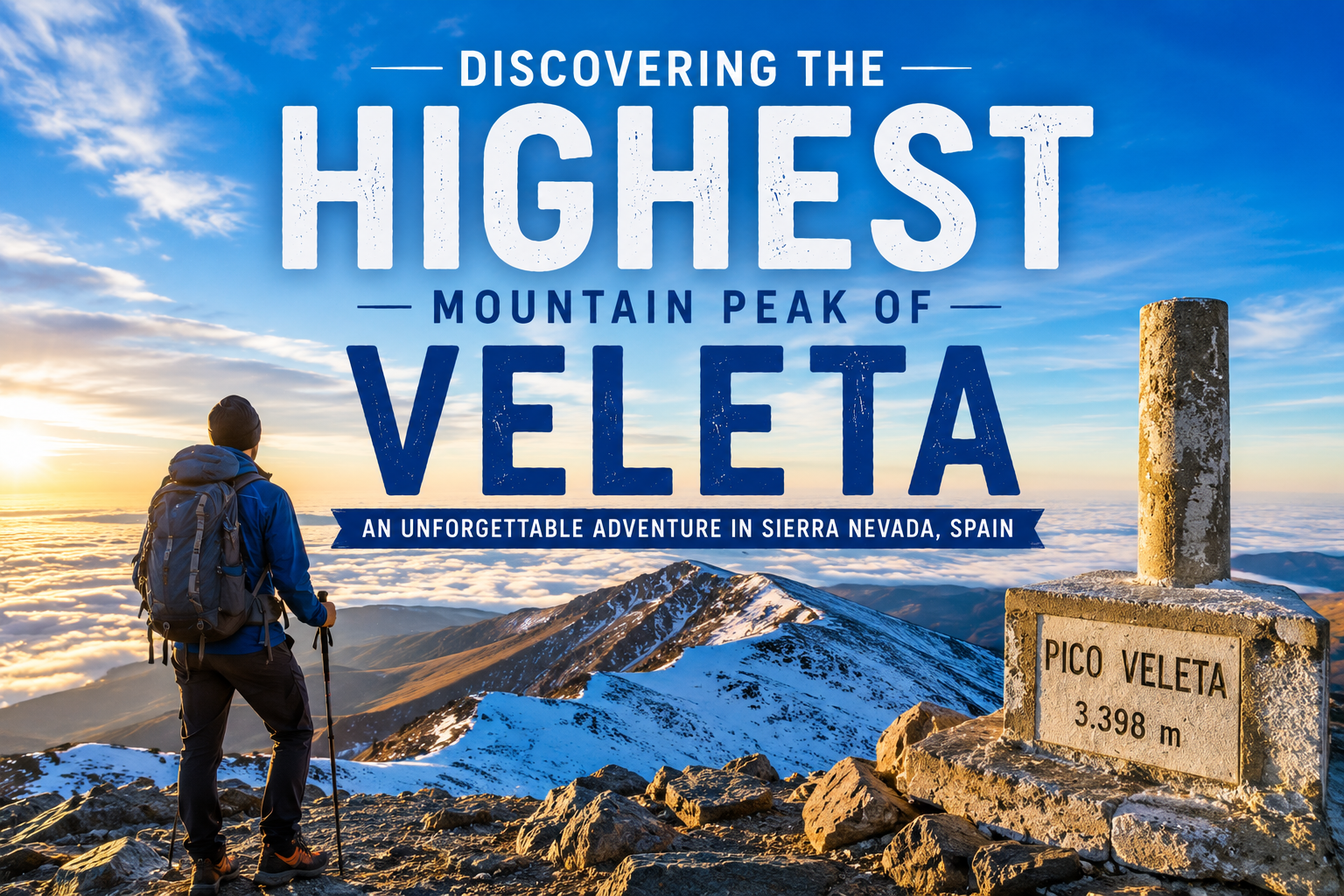
There are some peaks that call to you, not just with their height, but with a kind of silent magnetism that makes you pack your bags before you even know why. For me, Pico Veleta in Spain’s Sierra Nevada was precisely that. I’ve stood on many summits across the globe, but the view from Veleta—a mountain that is not only the third highest peak of the Iberian Peninsula but also the second highest in the Sierra Nevada—stayed with me long after I descended .
Rising to an impressive 3,398 meters (or 3,396 m, depending on your source), Veleta isn’t just a mountain; it’s an experience that encapsulates the raw beauty of Andalusia . From the sun-drenched city of Granada to the rugged, high-altitude trails, here’s everything you need to know to plan your own adventure to its summit.
Choosing Your Adventure: How to Conquer the Veleta
Unlike some mountains that offer only one route, Veleta is wonderfully versatile. Whether you’re a committed hiker, a road cyclist seeking a challenge, or a traveler looking for a less strenuous way to the top, there’s a path for you.
The Classic Hiker’s Route: From Hoya de la Mora
For many, the heart of the Veleta experience lies in the classic hike from the high-altitude car park at Hoya de la Mora, sitting at 2,500 meters . This is the approach I recommend for first-timers. The trail is a rewarding trek of about 10-12 kilometers round trip, typically taking 4 to 6 hours .
What I loved about this route was the flexibility. The path is a mix of winding roads and steeper, more direct hiking trails that cut through the hairpin turns . You can choose your own adventure moment by moment. The initial part of the route takes you past the Virgen de las Nieves monument before you begin the serious climb . Trust me, the panoramic views of the Mediterranean Sea and, on exceptionally clear days, the African continent, are well worth the effort .
The Cyclist’s Mecca: Europe’s Longest Climb
I have to give special mention to the cyclists. Veleta is legendary in the cycling world for hosting the highest paved road in Europe, making it a bucket-list climb for many . Starting in Granada, you’ll face a grueling 38 km ascent with over 2,700 meters of elevation gain .
One rider described the initial 6 km through Monachil as the hardest part, with gradients reaching 17% . If you’re a cyclist, the reward is an unparalleled sense of achievement. The road to Hoya de la Mora is a challenge you’ll never forget .
The Accessible Approach: Chairlift and Shuttle Bus
If you’re short on time or prefer to skip the endurance challenge, there are easier ways to get your summit selfie. In the summer, a chairlift operates from the Sierra Nevada ski station, taking you up to 2,900 meters. From there, it’s a short scramble to the peak, making it a fantastic option for families or those who simply want to soak in the views without the long trek .
Additionally, during the summer months, a microbús service can take you from the Albergue Universitario at Hoya de la Mora almost to the summit. It drops you off just a short walk from the top, and I strongly recommend booking this in advance as seats fill up quickly .
A Warning from the Top: Acclimatizing to the Altitude
The climb to Veleta isn’t technically difficult—it’s essentially a walk-up rather than a technical climb—but the altitude is not to be underestimated . As a seasoned traveler, I can tell you that the thin air is often the biggest challenge. You might experience symptoms of altitude sickness like a headache, dizziness, or shortness of breath .
My golden advice? Walk slowly, especially on the final scramble, and hydrate obsessively. There are no natural water sources along the trail, so carry at least two liters of water per person . The exposed terrain means there is no shelter from the elements—you’ll feel the powerful sun during the day and biting, cold winds at the summit, even in summer .
Planning Your Trip
Best Time to Go
The ideal time for a summit bid is between June and September . This is when the snow has typically melted, and the trails are clear and accessible. While the mountain is open to hikers all year, attempting the summit in winter or early spring requires mountaineering experience, crampons, and an ice axe .
What to Pack
-
Proper Footwear: Hiking boots or sturdy trail shoes are non-negotiable. The top section involves scrambling over large rocks .
-
Layers: You need a windproof jacket and warm fleece. It’s common to start in a t-shirt and end in gloves and a beanie .
-
Sun Protection: Sunglasses and high-SPF sunscreen are essential, as the sun is intense at this altitude .
-
Hydration and Food: Bring plenty of water and high-energy snacks like nuts and fruit bars .
-
Trekking Poles: These can provide significant support, especially on the descent .
Final Thoughts
Pico Veleta is a mountain that rewards preparation. It’s not the hardest hike I’ve ever done, but it’s one of the most memorable. Standing on its “ship’s bow” peak—a name derived from its unique shape —with the vast expanse of the Sierra Nevada stretching out before you, is a moment of pure travel magic. You feel the weight of the history, the struggle of the climb, and the sheer beauty of the landscape. It’s a place that lets you stand on top of Spain, gaze towards Africa, and truly feel alive.