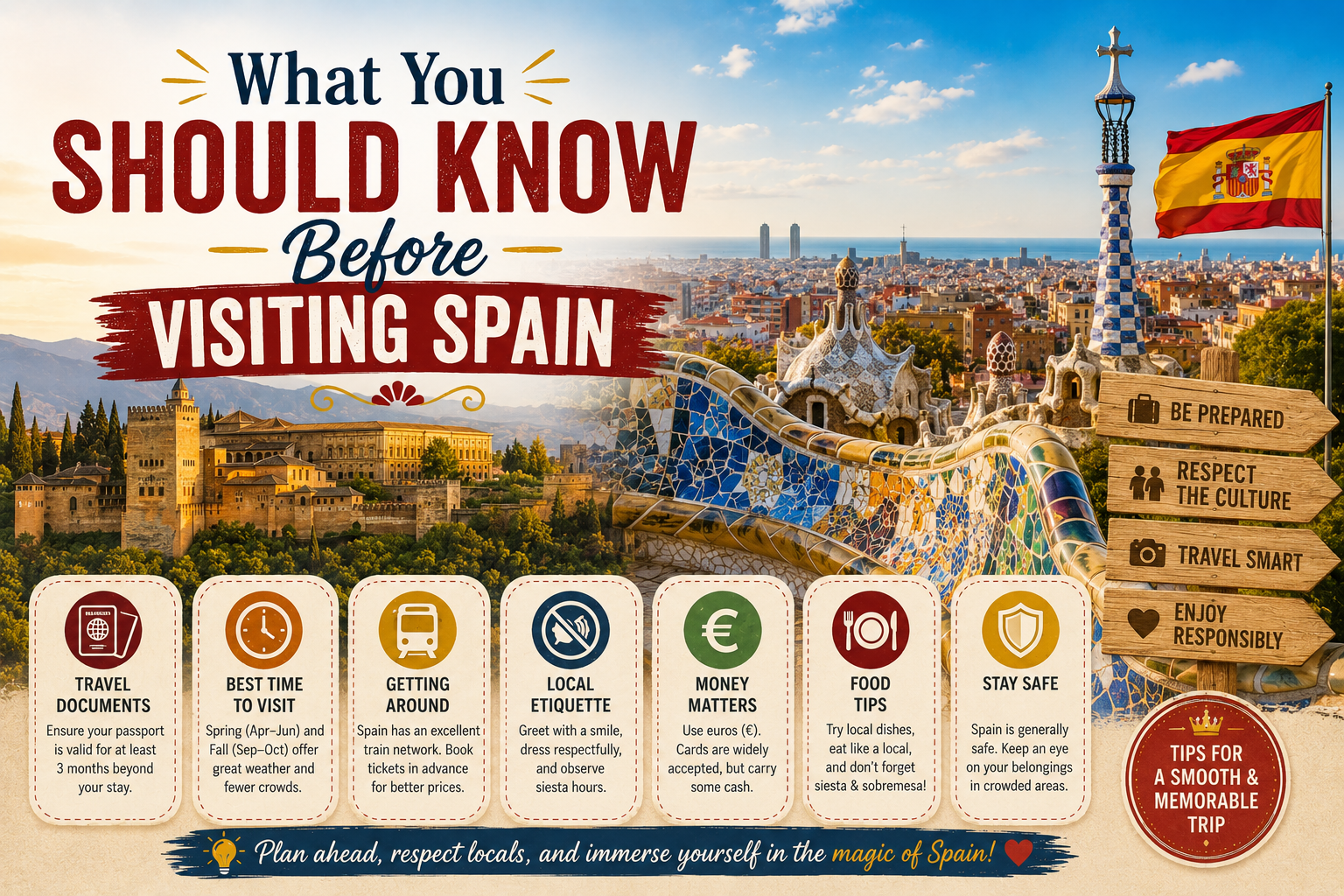
The first time I set foot in Spain, I made a mistake. A classic rookie error. I arrived in Barcelona at 2 PM, dropped my bags at the hotel, and immediately went searching for lunch. Every restaurant I passed was shuttered, the streets eerily quiet. I walked for twenty minutes, stomach growling, before a kind local took pity on me and explained: “Amigo, we eat at two. Not for lunch. For dinner. Lunch is at two.” I’d stumbled into the sacred hour of the siesta, and my American stomach had no idea what hit it.
That was fifteen years and nearly a dozen trips ago. Since then, I’ve crisscrossed Spain from the green hills of Galicia to the sun-baked plains of Andalusia, from the modernist marvels of Barcelona to the timeless cobblestones of Toledo. I’ve eaten my weight in jamón ibérico, danced until dawn in Seville, and gotten lost in the labyrinthine alleys of the Albaicín in Granada. And along the way, I’ve learned things that no guidebook ever told me.
So, if you’re planning your first trip to Spain, let me save you from my mistakes. Here’s everything you should know before visiting Spain—not just the practical stuff, but the cultural, emotional, and utterly human things that will make your journey unforgettable.
1. The Timing of Everything Is Different
Let’s start with the one that got me first. Spanish meal times are on a completely different schedule. And I don’t just mean a little different—I mean confusingly, gloriously different.
-
Breakfast (Desayuno): 7:00 AM – 10:00 AM. Usually light. A coffee and a pastry, or perhaps some toast with tomato and olive oil.
-
Mid-morning snack (Almuerzo): 10:30 AM – 12:00 PM. A quick bite to hold you over.
-
Lunch (Comida): 2:00 PM – 4:00 PM. This is the main meal of the day. Restaurants are bustling, and many offer fixed-price “menú del día” deals. Don’t miss it.
-
Afternoon snack (Merienda): 5:00 PM – 6:30 PM. A small pick-me-up.
-
Dinner (Cena): 9:00 PM – 11:30 PM. Yes, you read that correctly. Dinner is late. If you show up at 7 PM, you’ll find empty restaurants and confused staff.
My advice: Embrace it. Your body will adjust in a day or two. And trust me, there’s something magical about finishing a meal at midnight, the warm Mediterranean breeze on your skin, the streets alive with laughter and chatter. It’s not just a schedule—it’s a way of life.
2. The Siesta Isn’t a Nap (Well, Not Always)
Here’s another common misconception. Yes, the siesta exists. But unless you’re in a small village during the height of summer, you won’t see everyone napping. The siesta is, first and foremost, a pause. Shops close between 2 PM and 5 PM. Museums and attractions often shut their doors. It’s a time for family, for a long, leisurely lunch, and yes—sometimes a brief rest. But in big cities like Madrid or Barcelona, the siesta is fading, especially in tourist areas.
That said, plan around it. If you’re visiting smaller towns, don’t be surprised if everything shuts down between 2–5 PM. Use this time to have a long lunch yourself, enjoy a siesta at your hotel, or simply sit in a plaza with a coffee and watch the world slow down. It’s one of Spain’s most beautiful traditions—and once you surrender to it, you’ll wonder why everywhere doesn’t do it.
3. Spain Is Not One Country—It’s Many
This was the second lesson that took me years to fully appreciate. Spain is a nation of nations. The cultural differences between regions are massive. If you come expecting one unified “Spanish” experience, you’ll miss the richness that makes this country so extraordinary.
Catalonia (Barcelona, Girona, Tarragona) has its own language, its own flag, its own fiercely independent spirit. The architecture here—Gaudí’s masterpieces, the Gothic Quarter—feels distinct from anywhere else.
Andalusia (Seville, Granada, Córdoba) is the Spain of flamenco, whitewashed villages, and Moorish palaces. The heat here is intense, the passion palpable. Walking through the Alhambra at sunset is a religious experience, I swear.
The Basque Country (Bilbao, San Sebastián) is a gastronomic paradise. Michelin stars bloom like wildflowers here, and the pintxos (Basque tapas) culture is unlike anything else. Plus, the landscape is green, lush, and deeply European.
Madrid sits in the center, the beating heart of the country. It’s less flashy than Barcelona, less exotic than Andalusia—but it’s real. The museums (the Prado, the Reina Sofía) are world-class, the food scene is incredible, and the energy is infectious.
My advice: Don’t try to see all of Spain in one trip. Pick a region. Immerse yourself. Come back for the others. I’ve been coming back for fifteen years, and I’m still not done.
4. The Food Is So Much More Than Tapas
Yes, tapas are amazing. Yes, you should eat them. But Spain’s culinary landscape is vast and varied, and reducing it to small plates is like saying Italy is just about pizza.
Let me give you a quick tour of my favorites:
-
Jamón Ibérico de Bellota: The king of cured meats. Made from black-footed pigs that feast on acorns, it’s rich, nutty, and melts on your tongue. Good jamón is not cheap—and it shouldn’t be. Pay the price. It’s worth it.
-
Paella: I know you know about paella. But here’s the thing—authentic Valencian paella doesn’t have seafood. It has rabbit, chicken, and green beans. The seafood version is called paella de mariscos, and it’s also delicious, but if you want the real deal, head to Valencia.
-
Tortilla Española: The humble Spanish omelet. Potatoes, onions (or not, if you’re a purist—I prefer with), and eggs. Simple. Perfect. I’ve eaten it for breakfast, lunch, and dinner on the same day and felt no shame.
-
Gazpacho and Salmorejo: Cold tomato soups from Andalusia. In the sweltering summer heat, they’re life-saving. Salmorejo is thicker and often topped with hard-boiled egg and jamón.
-
Churros con Chocolate: Yes, it’s a breakfast food. Yes, it’s also a late-night snack. Dip the fried dough into thick, dark Spanish chocolate and try not to close your eyes in ecstasy. You won’t succeed.
Where to eat: Avoid the tourist traps with pictures on the menus and staff calling out to you on the street. Find the places packed with locals. Follow the sound of loud conversation and clinking glasses. That’s where the real food lives.
5. Learn Some Spanish (And Don’t Be Shy)
I’m not saying you need to be fluent. But knowing a few key phrases will open doors—literally and metaphorically.
Start with these:
-
Buenos días / Buenas tardes / Buenas noches (Good morning / afternoon / night)
-
Por favor (Please)
-
Gracias (Thank you)
-
Perdona (Excuse me)
-
¿Dónde está…? (Where is…?)
-
La cuenta, por favor (The bill, please)
Here’s the golden rule: Always greet people before asking for something. A simple “Buenos días, ¿me puede ayudar?” (Good morning, can you help me?) goes a long way. Spanish people are warm and incredibly patient with travelers who make an effort. Don’t be afraid to make mistakes. They’ll appreciate the attempt, and you’ll feel more connected to the place.
6. The Flamenco Is About More Than Dancing
I’ll never forget my first night in Seville. A friend of a friend took me to a tiny, unmarked venue in the Triana neighborhood. There were maybe twenty of us crammed into the room. A guitarist started playing. A singer began to wail—and I mean wail, in a voice that seemed to come from somewhere ancient and wounded. Then the dancer stepped forward, and my jaw hit the floor.
Flamenco isn’t just entertainment. It’s a form of raw, unfiltered emotion. It comes from the Andalusian Roma communities and blends singing (cante), guitar playing (toque), dance (baile), and handclaps (palmas). The best performances are intimate, not the large dinner shows you’ll see advertised. Ask locals for recommendations. Go in with an open heart. Let it move you.
7. Traveling Between Cities: Choose Wisely
Spain’s high-speed train system (AVE) is fantastic. Madrid to Barcelona in under three hours. Madrid to Seville in about two and a half. The trains are clean, comfortable, and punctual.
Buses are cheaper but slower and less comfortable. I’ve taken my share of overnight buses in Spain, and while they’re fine in a pinch, the train is worth the extra euros.
Flights between major cities are also an option, but by the time you factor in getting to and from airports, security, and waiting, the train is often just as fast.
My advice: Book train tickets in advance. Prices rise closer to the departure date, and popular routes sell out. I learned this the hard way when I had to pay double for a last-minute ticket from Barcelona to Madrid.
8. The Fiestas Are Otherworldly
Spaniards know how to throw a party. I’m not talking about nightclubs (though they have those too). I’m talking about festivals that have been celebrated for centuries—some of them bizarre, some of them breathtaking, all of them unforgettable.
Semana Santa (Holy Week) in Seville and Málaga is a spectacle of massive floats, hooded penitents, and haunting processions. I’m not religious, but watching thousands of people moved to tears by a single statue of the Virgin Mary? That’s something you don’t forget.
Las Fallas in Valencia happens in March. Gigantic papier-mâché figures are built, paraded, and then—get this—burned to the ground. The entire city smells of smoke and gunpowder for a week. It’s chaotic, dangerous, and absolutely glorious.
La Tomatina in Buñol is the famous tomato fight. I’ve done it. It’s messy, it’s silly, and you’ll be picking tomato seeds out of your ears for days. Worth it? Yes, once.
Feria de Abril in Seville is a week of flamenco dresses, horse-drawn carriages, sherry drinking, and dancing. The entire city transforms into a giant party. If you’re in Andalusia in April, don’t miss it.
9. The Weather Will Surprise You
Spain isn’t always sunny. I know that’s what the postcards show, but listen to me: Spain has real seasons.
Summer in Andalusia is brutally hot. I’m talking 40°C (104°F) in the shade. Sightseeing at 3 PM is a terrible idea. Plan for early mornings and late evenings, and embrace the siesta when the sun is at its fiercest.
Winter in central Spain (Madrid, Castile-León) is freezing. I’ve been snowed on in Madrid in January. The wind off the plains cuts like a knife.
The north (Basque Country, Galicia, Asturias) is rainy and green, much like Ireland or the UK. It’s beautiful in its own right, but pack an umbrella.
Spring and autumn are the sweet spots—mild temperatures, fewer tourists, and everything in bloom.
10. Spanish People Are Not Rude—They’re Honest
One thing I’ve noticed over the years: Spain gets a reputation for “rude” customer service. Waiters seem brusque. Shopkeepers aren’t overly chatty. But here’s the thing—it’s not rudeness. It’s directness. Spaniards don’t do the fake smile, the endless small talk, the “have a nice day” that means nothing. They are warm, genuine, and deeply friendly—but they’re also honest. Once you get past that initial barrier, you’ll find some of the most generous, open-hearted people you’ll ever meet.
Final Thoughts: Spain Will Change You
I’ve traveled to many places. I’ve seen the pyramids of Egypt, the temples of Kyoto, the fjords of Norway. But Spain? Spain feels like home in a way nowhere else does. Maybe it’s the light. Maybe it’s the food. Maybe it’s the way everyone seems to understand that life is meant to be enjoyed, not just endured.
Before you go, remember this: Spain isn’t a place to be checked off a list. It’s a place to be felt. Slow down. Eat late. Take the backstreets. Talk to strangers. Let the rhythm of the country carry you. Because the best thing about Spain isn’t the Alhambra or the Sagrada Familia or the beaches of the Costa del Sol. The best thing about Spain is the way it makes you feel: alive, present, and deeply grateful to be exactly where you are.
¿Vas a España? Disfruta. (Going to Spain? Enjoy.)
I’ll see you there. I’m probably already planning my next trip back.